Make the marinade. In a medium bowl or glass measuring cup, whisk together the olive oil, tamari, lemon juice, paprika, cumin, garlic powder, and black pepper until smooth and brick-red.
Season and marinate the chicken. Pat the chicken thighs dry, then season them on both sides with 1 ½ teaspoons kosher salt. Transfer the chicken to a baking dish or zip-top bag, pour the marinade over top, and toss until every piece is thoroughly coated. Refrigerate for at least 30 minutes, or up to 10 hours for deeper flavor. If you’re short on time, even a quick marinade will still give you a bold, smoky-sweet crust. (See Note 2)
Preheat the pan. When you’re ready to cook, heat a large stainless steel skillet over high heat until it’s hot when you hover your hand over the skillet. If your pan tends to stick, add a small drizzle of high-heat cooking oil; otherwise, the oil in the marinade will be enough.
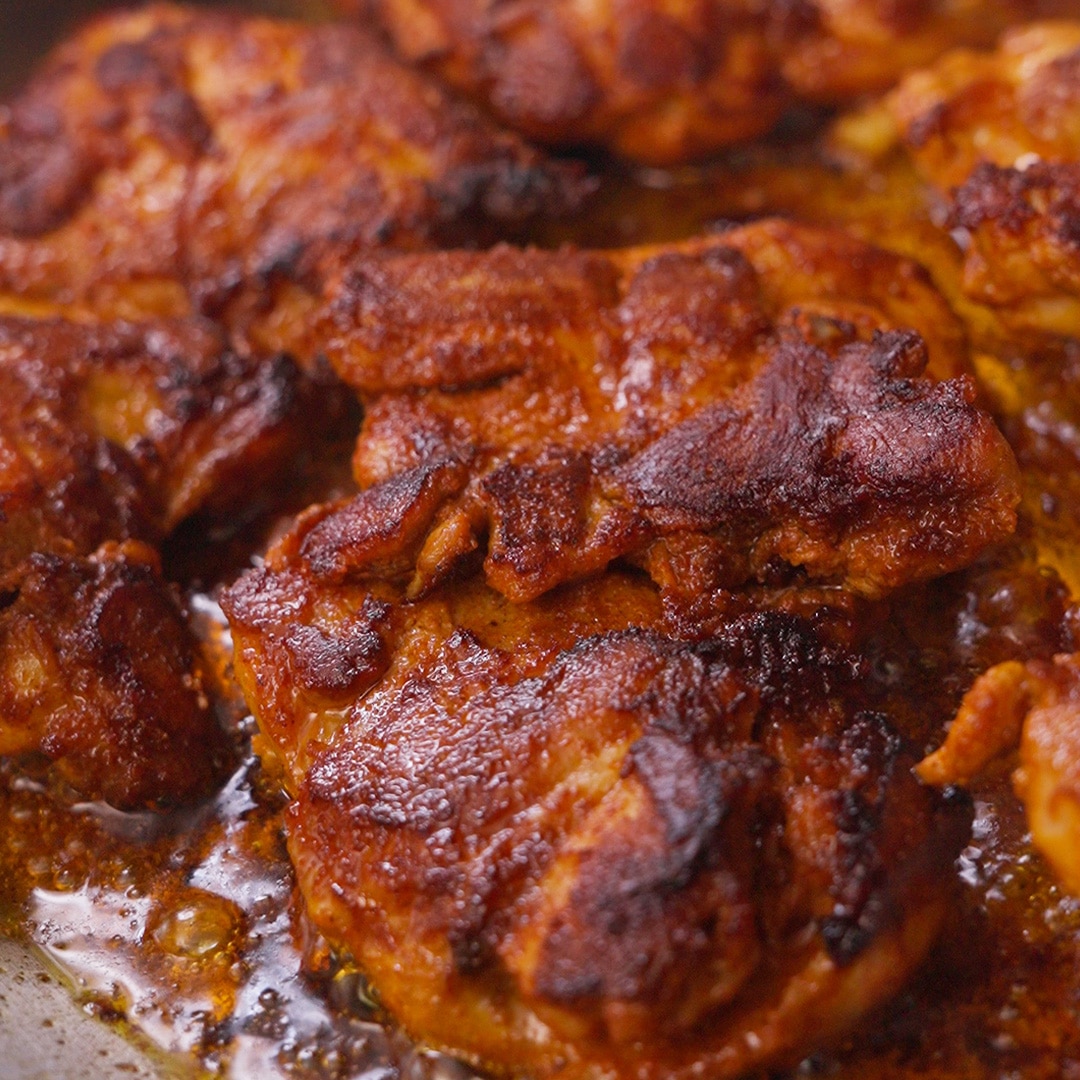
Sear the chicken in batches. Lift the chicken from the marinade, letting any excess drip off, and arrange the thighs in the skillet in a single layer. Do not crowd the pan; with this quantity, you will likely need to work in batches. If using a Chef’s Press (See Note 3), place it on top of the chicken to encourage even contact and better browning. I sometimes have to use two chef presses to cover all the chicken! If you only have one, then start with a smaller batch.
Check for doneness. Cook the first side for about 3 to 5 minutes, until the chicken is deeply browned and releases easily from the pan. Flip and cook for another 3 to 4 minutes, until the second side is browned and the chicken is cooked through. The thickest part should register just shy of 165°F when inserted with an instant-read thermometer (See Note 4). You can also press the chicken with your finger. It should feel firm and springy, not soft.
Make a quick pan sauce (optional). Reduce the heat to medium-low. Add a splash of white wine to the skillet and scrape up the browned bits from the bottom of the pan. Add the chicken stock and butter, then whisk vigorously for 2 to 3 minutes, until the sauce looks glossy and slightly thickened. Taste and season with salt and black pepper as needed.
Rest and serve. Transfer the cooked chicken to a platter or cutting board and let it rest for 5 to 10 minutes before serving or slicing. That short rest finishes cooking the chicken and helps the juices settle back into the meat, so it stays tender.