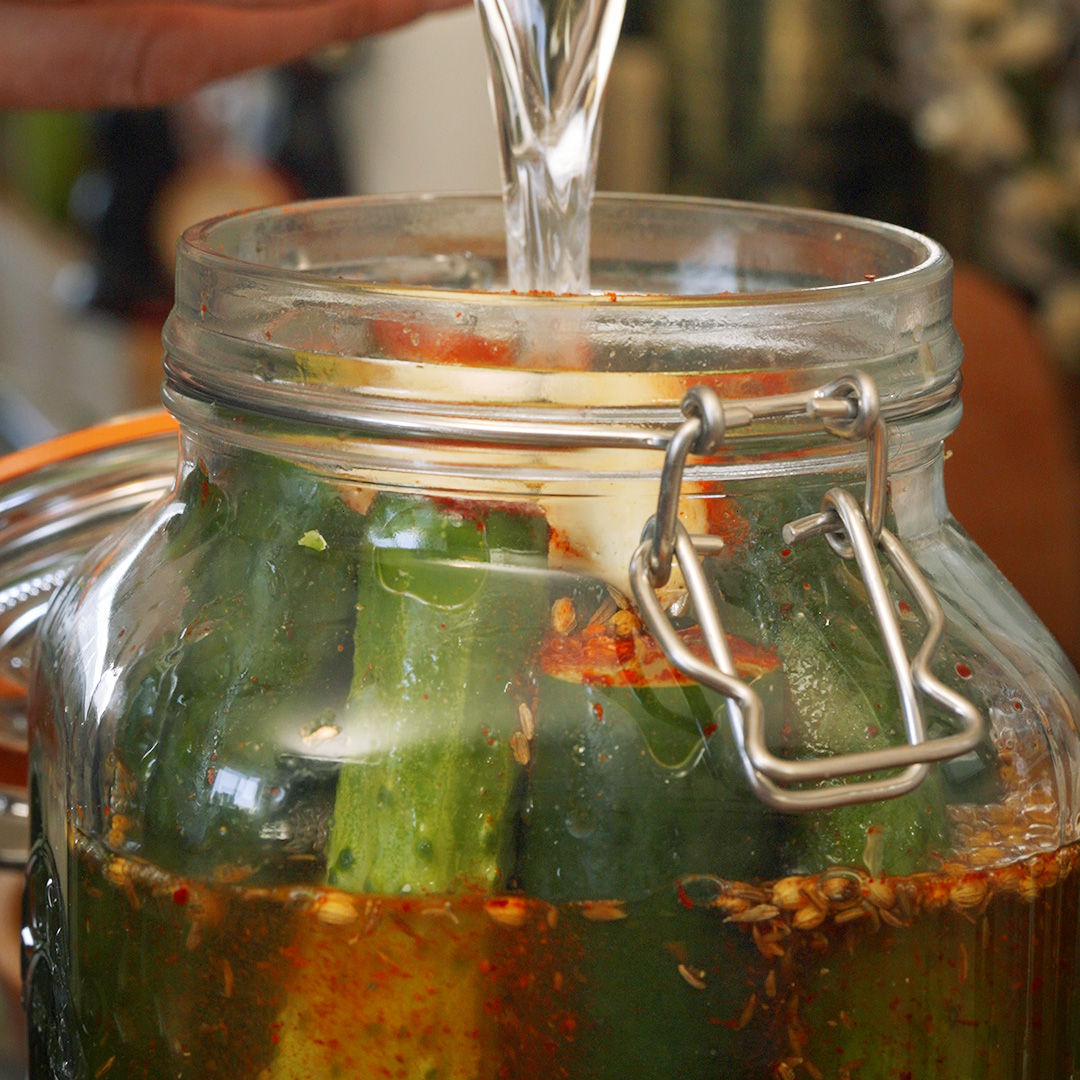
Fermentation #6 – Spicy Cucumbers

The cucumbers were looking lovely at the farmers market and decided to do a quick ferment!
This is the first lacto fermentation recipe that I’m sharing on my substack as a standalone feature and figured starting with cucumbers was a good place to start! The cucumber pickle is one of the most common and instantly recognizable ferments in the US. And while pickles are ferments are a bit different, we’re still calling these pickles because you know… they’re pickles (if that makes sense).
We’re keeping this one pretty standard with some Coriander & Cumin Seeds and a few Garlic Cloves. I got some local gochugaru from the farmers market and added that as well for some heat.
I always say this with fermentation, but you can really use any herb or spice that you like and can even use more acidic ingredients like lemon peels or ingredients like fresh grated ginger. Go wild, have fun and try different things.
Cheers,
Joey
Youtube Video:
More recipes and videos on my Youtube HERE
Full Recipe:
Fermentation #6 – Spicy Cucumbers
Ingredients
Method
- Place your fermentation vessel on a kitchen scale and zero out the weight. Combine cucumbers, garlic, coriander, cumin and gochugaru into your fermentation vessel. Fill the vessel with water, covering all of the ingredients. Leave 1-2 inches of space at the top for the fermentation weight if using, and also for the pressure build up.
- Add 3% salt by weight. Meaning, if the weight of all of the ingredients in the step above is 2000 grams, you would add 60 grams of salt to the vessel. Close the vessel and move it around to dissolve all of the salt.
- Once dissolved, open the vessel and use a fermentation weight or even just a piece of paper towel over the surface of the mixture to ensure that everything is submerged in liquid before sealing.
- Place the vessel in a darker area out of any direct sunlight and allow 3-6 days to ferment. 2-3 day for half sour pickles and longer for full sour. Make sure to check on it at least once per day (ideally twice) to relieve any pressure build up (if not using a pressure airlock). This pressure build up also indicates that fermentation is fully taking place.